


IP Cameras in Kenya
IP Cameras in Kenya: 5 Smart Features for Better Security
IP Cameras in Kenya provide digital video surveillance over a network, making them suitable for offices, shops, schools, warehouses, homes and commercial properties. Compared with older analog surveillance setups, IP cameras can provide high-resolution video, network connectivity, flexible installation and integration with NVRs and other security systems.
M Heritage Technologies helps businesses and organizations select CCTV equipment according to their coverage requirements, lighting conditions, network infrastructure, recording needs and security objectives. A properly designed IP surveillance system can combine cameras, PoE, NVR recording, storage, remote monitoring and intelligent video analytics.
What Are IP Cameras in Kenya?
IP Cameras in Kenya are digital security cameras that transmit video and other data through an IP network. Depending on the model, an IP camera can connect to an NVR, viewing software or an authorized remote-management platform. Many models can also receive power through compatible Power over Ethernet infrastructure.
Hikvision describes its network cameras as solutions for applications ranging from general video security to video-content analytics. Its current portfolio includes Value, Pro, ColorVu, AcuSense, DeepinView, panoramic, PTZ and specialized camera series.
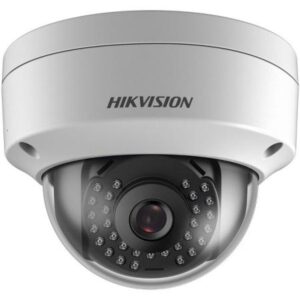 5 Important Features of IP Cameras
1. High-Resolution Network Video
One of the main advantages of an IP camera is the ability to capture high-resolution digital video. Resolution should be selected according to the purpose of the camera rather than simply choosing the highest number available.
For example, a camera covering a wide compound may need different resolution and lens characteristics from a camera monitoring a reception desk. Hikvision’s current network-camera range includes models from lower resolutions through 4 MP, 6 MP, 8 MP and higher project-oriented options, depending on the series.
2. Power over Ethernet
Many IP cameras support PoE, allowing compatible Ethernet infrastructure to carry both network data and electrical power. This can simplify installation because a separate power cable may not be required at every camera position.
PoE is particularly useful when several cameras are distributed around an office, shop, warehouse or compound. The switch, cabling and camera must support compatible PoE requirements, and the available power budget should be considered when designing the system.
3. Night Vision and Low-Light Performance
Surveillance needs often continue after sunset, so low-light performance is an important selection factor. Depending on the camera, night-time imaging may use infrared illumination, white light, Smart Hybrid Light or other technologies.
Hikvision’s current ColorVu and Smart Hybrid Light solutions are designed to improve colour and detail in low-light environments on supported models. Smart Hybrid Light can use infrared when additional illumination is unnecessary and activate white light when a person or vehicle is detected, depending on the model and configuration.
4. Intelligent Video Analytics
Modern IP cameras can provide more than basic motion detection. Selected models can use deep-learning algorithms to help identify people and vehicles, detect perimeter events and improve the efficiency of security alerts.
Hikvision’s AcuSense technology is designed to distinguish people and vehicles from other moving objects on supported cameras and recorders. It can also apply classifications to recorded footage to make searches faster and help security teams focus on relevant events.
5. Network Integration and Remote Monitoring
Because IP cameras operate on a network, they can be integrated with NVRs, switches, structured cabling and authorized monitoring platforms. This allows organizations to build systems that can be expanded as security requirements change.
Remote access can provide authorized users with live or recorded video away from the premises, depending on the system. Remote access should be secured with strong credentials, appropriate permissions, current firmware and carefully controlled network exposure.
IP Cameras and NVR Recording
An IP camera captures video, but a complete surveillance system normally also requires a method of recording and managing that video. An NVR can centralize streams from multiple network cameras and provide recording, playback, search and other functions depending on the model.
Storage requirements depend on camera count, resolution, frame rate, compression, recording schedule and retention period. Planning these requirements before installation helps avoid insufficient storage or unnecessary equipment costs.

Choosing the Right IP Camera
- Define the viewing area: Identify entrances, corridors, parking areas, stockrooms, gates and other critical locations.
- Choose the camera type: Bullet, dome, turret, PTZ and panoramic cameras serve different applications.
- Consider the lens: Select a focal length and field of view appropriate for the distance and area being monitored.
- Check lighting: Consider daylight, night-time and low-light conditions before choosing the camera.
- Match resolution to the purpose: Select enough detail for the intended identification or monitoring task.
- Plan PoE: Confirm that the switch and cabling can provide the required power and network connectivity.
- Consider analytics: People/vehicle classification and other smart features can be valuable where relevant.
- Plan recording: Match the NVR and storage capacity to the number of cameras and required retention.
Applications of IP Cameras in Kenya
Business Offices
IP cameras can monitor entrances, reception areas, corridors, parking and other important locations while integrating with the organization’s network infrastructure.
Retail Businesses
Retail surveillance can cover entrances, sales floors, checkout areas, stockrooms and loading zones. Camera placement should focus on useful views rather than simply increasing camera numbers.
Schools and Institutions
IP surveillance can provide controlled monitoring around gates, walkways, buildings and other selected areas. Access to video should be limited to authorized personnel.
Warehouses and Industrial Sites
Warehouses may require long-distance views, perimeter monitoring and cameras suited to challenging lighting or environmental conditions. PTZ and specialized cameras may complement fixed cameras.
Homes and Residential Compounds
IP cameras can monitor gates, driveways, entrances and other areas around residential properties, with remote viewing available on supported systems.
IP Camera Security Best Practices
IP cameras are network-connected devices and should therefore be treated as part of the organization’s IT and security environment. Change default credentials, use strong passwords, restrict administrative access, keep firmware updated and place cameras on appropriate network segments where practical.
For larger deployments, camera traffic can be organized using VLANs and other network-security controls. See our Network Security Solutions in Kenya page for additional guidance.
Why Choose M Heritage Technologies?
M Heritage Technologies provides CCTV and networking solutions for businesses, institutions and properties in Kenya. We help customers select suitable IP cameras, NVRs, PoE equipment and related infrastructure based on the actual requirements of the site.
Our services can also include CCTV Installation Services in Kenya and CCTV Maintenance Services in Kenya to keep the surveillance system operating reliably.
Frequently Asked Questions
What is an IP camera?
An IP camera is a digital surveillance camera that communicates over an IP network and can connect to compatible recording and management systems.
Are IP cameras better than analog CCTV?
IP cameras provide network connectivity, digital video and many modern integration options. Whether they are the best choice depends on the project, existing infrastructure and security requirements.
Can IP cameras work without Internet?
Yes. A local IP surveillance system can operate and record within a local network without Internet access. Internet connectivity is useful for remote access and selected cloud or remote-management functions.
Do IP cameras need PoE?
Not all IP cameras require PoE, but many support it. PoE can simplify installation by carrying power and data through compatible Ethernet infrastructure.
Can IP cameras be viewed remotely?
Yes, when the camera system and network are configured for secure remote access. Permissions, credentials, firmware and network exposure should be managed carefully.
Get IP Cameras in Kenya
Looking for reliable IP Cameras in Kenya for your office, shop, school, warehouse or property? Contact M Heritage Technologies for help selecting cameras, NVRs, PoE infrastructure and professional CCTV installation.


